
Stump grinding and tree stump removal in Gisborne
06 883 0114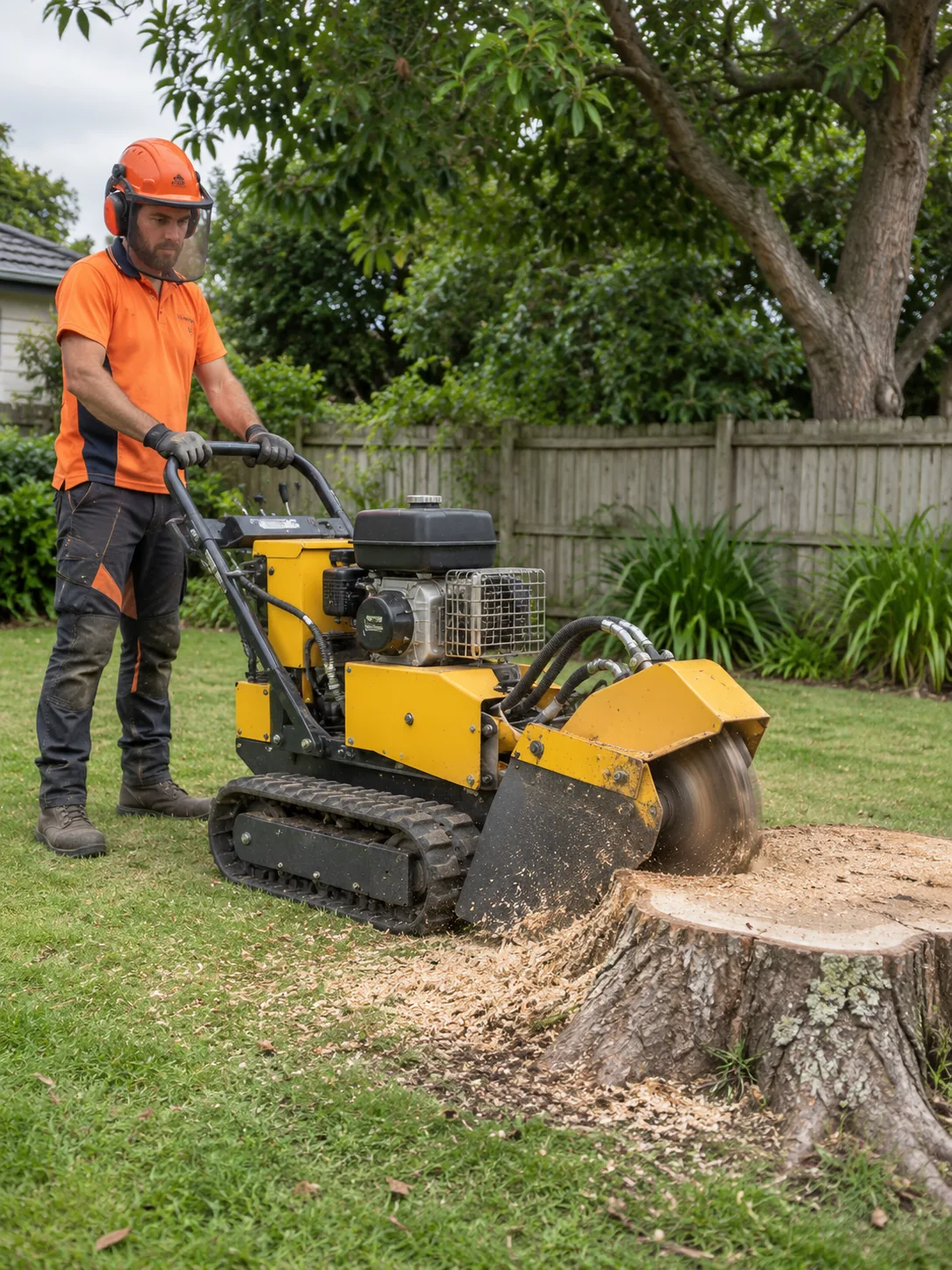
Tree stump removal by stump grinding
Stump grinding can clear old tree, palm and hedge stumps that obstruct mowing, access or planned property work. Our Gisborne service reduces stump wood within an agreed area and depth, with the route for the machine and the handling of grindings discussed in your quote.
We welcome enquiries for stumps left after recent tree work and those that have been on the property for years. Whether you have one awkward stump or several from an old boundary, we can help you work out the appropriate removal.
Grinding breaks down stump wood in place. It allows the main stump to be addressed without treating the job as an excavation of the entire root system. The work is planned around the access and the area you want to reclaim.
Call 06 883 0114 for a free stump grinding quote for your Gisborne property.
Why remove a tree stump?
A stump can make a useful part of the site difficult to maintain. You may have to mow around it, keep a path away from it or leave a planting area unfinished. Over time, it becomes easy to plan around the obstacle instead of making the space work for you.
Removal is also worth considering before landscaping or other property work. A new lawn, a wider bed or replacement planting may need more preparation than simply cutting the remaining wood close to the surface.
You do not need a large landscaping project to justify dealing with a stump. Clearing an awkward spot can be a worthwhile improvement on its own.
Benefits of stump removal in Gisborne
The main benefit is getting the space back. Once the visible stump has been addressed, you have more freedom to plan the area around the way you want to use it. A patch of lawn can become simpler to maintain, or a bed can follow the outline you originally wanted.
Stump work also completes the visual change after a tree has gone. Instead of leaving a reminder of the old tree on the site, you can begin preparing for what comes next.
The finished ground still needs to suit that next use. We help you distinguish the grinding itself from tasks such as removing surplus material, adding soil and preparing a new surface.
- Clear an obstacle from a lawn or garden bed.
- Make mowing and grounds maintenance easier.
- Finish the removal of an unwanted tree or old hedge.
- Create more flexibility for replacement planting.
- Prepare the area for the next stage of landscaping.
How grinding a tree stump works
A stump grinder uses a rotating cutting head to break the wood into smaller fragments. The machine works through the stump within the specified area and depth, leaving a mixture of wood fragments and soil.
Before the work begins, the position of the stump and the route to it are checked. Nearby paving, garden walls and known underground services affect what can be reached and how the work should proceed.
The depth is selected for the job. A plan for lawn may differ from a planting project, and construction can require additional excavation beyond grinding. Explaining the next use of the space helps set an appropriate starting point.
The cutting process deals with the wood within reach of the agreed working area. A broad stump with visible roots at the surface may involve a different extent of work from a narrow stump cut close to the soil. Both the main stump and the intended edges of the job should be understood.
The machinery needs room to be positioned and operated as well as a route to the stump. Checking that space beforehand is part of deciding whether grinding is practical for the stump you have.
Why choose our Gisborne stump grinding service?
We help you look beyond the stump to the result you need from the space. That means identifying the wood to be ground, checking practical access and explaining the options for the resulting material.
You can ask about stump grinding as a separate job or with tree removal. We also welcome enquiries about the smaller stumps left along an old hedge or around a property, not just the largest stump in the lawn.
Our approach is to make the work clear and the finish useful. We discuss the proposed job and price so you can decide how it fits your plans.
Single, large and multiple stump removal
Include every stump you want considered. A group along a boundary may share access, while stumps in different parts of the property can have different working conditions. Looking at the full job helps us give you a more useful quote.
Related tree and site work
If the tree is still standing or a hedge is being removed, mention that too. Removal and grinding can be discussed together, with the separate parts of the job identified before you proceed.
The stump grinding process
A well-planned grinding job brings the stump, the machinery route and the finished area together.
Checking access and the surrounding area
Gate widths, slopes, steps and the route through the property help determine whether the machinery can reach the stump. Known buried cables, pipes and irrigation need to be raised before grinding is arranged.
Grinding the stump
The cutting head reduces the wood within the agreed area. The extent of accessible stump and root wood is part of that scope. Grinding does not mean every root across the site has been excavated.
Handling the grindings
The material produced can remain in an agreed area or be included in removal. The choice depends on the job and the finish you want. It is important to distinguish a filled grinding area from ground that has been fully prepared for lawn, planting or building.
Stump grinding equipment and site access
The cutting head is the working part of a stump grinder. Its teeth break down the wood progressively, while the machine's body and controls allow it to be positioned for the job. The operator needs enough room for that movement as well as a route to the stump.
Stump grinders vary in size and layout. The suitable equipment depends on the stump and access, rather than the largest machine automatically being the right choice. A confined backyard and an open position can have very different practical requirements.
Surrounding surfaces need consideration too. Paving, retaining walls, garden edging and known services can restrict how the machine approaches the wood. These details help establish the reachable area and any limits on the grinding.
What changes the amount of stump grinding needed?
The visible top of the stump is only the starting point. The area to be addressed and the finish you want help determine how much wood needs grinding. A stump in the centre of a new lawn may need a different treatment from one being retained within a garden bed.
Several stumps from an old hedge can also involve more than their individual diameters suggest. Their positions, access and surrounding growth all affect the work.
The size and shape of the stump
A stump can be wide at ground level, irregular around the edges or surrounded by visible roots. Explain which parts are interfering with the space. This gives a clearer objective than a diameter measurement alone.
The intended ground finish
For lawn, the aim is a suitable area for grass preparation. For planting, the soil and any remaining material need attention. If a different project will follow, its preparation requirements should be established before the grinding depth is selected.
The amount of material to handle
A large stump can produce a substantial mixture of wood fragments and soil. Decide whether the material will stay in a suitable location or needs removal. That choice influences the finish and the work beyond the cutting process.
Stump grinding or digging out a tree stump?
Grinding and excavation are different approaches. Grinding deals with wood where it stands; excavation involves digging and lifting out the stump and the roots included in the excavation. Each has different implications for access, soil disturbance and the material left to handle.
For many unwanted stumps, grinding is a practical option to explore. A project that needs the whole stump and a wider root area removed may call for another approach. The choice should follow the site and the next use of the space.
If foundations or paving are planned, confirm the preparation required for that project before arranging the stump work. A ground stump does not by itself establish that the site is ready for construction.
Restoring the area after stump removal
Think about the site after the machinery has left. Surplus grindings may need to be taken away, suitable soil may be needed and the surface may need levelling before grass or plants can be established.
These finishing tasks can be discussed when the grinding is quoted. Being clear about them gives you a realistic path from an unwanted stump to a usable area.
For pricing, read our stump removal and grinding cost guide or call 06 883 0114 for a free quote based on the stumps at your property.
If you want to plant again, think about the position as well as the soil preparation. A new tree should suit the space it will eventually occupy. This is an opportunity to plan the space around the future canopy rather than repeat the original problem.
For a new lawn, ground finishing is its own stage. The area may need time and further preparation before it matches the surrounding surface. Ask what is included and what needs to be completed before seeding or turf is laid.
Click to call
06 883 0114